2 September, 2026
Restoring hope to our landscapes: Why everyone’s talking about Britain’s beavers
Special Interest Programme / Article
© Beaver Trust
In a lush green river valley outside Truro, Cornwall, the UK, the village of Ladock has seen years of bad flooding. Keen to make a difference, local organic farmer Chris Jones set about finding ways to slow the flow of water across his land. Looking to nature for solutions, he found an unlikely ally: a flat-tailed herbivorous engineer.Since their introduction to a two-hectare enclosure in 2017, a pair of busy beavers and their offspring have built eight dams and transformed a simple stream into a mosaic of ponds, wetlands and new streams. Eight new bird species have been recorded, including the water rail and firecrest, trout in the lodge pond have grown eightfold in size, and over 5,000 people have visited the project – plus millions more through the popular BBC TV wildlife show, Springwatch.
“Having beavers has been fascinating and informative,” says Chris. “One aim was for the project to be a public engagement tool and a research platform for universities. This has been fulfilled in spades. The most important lesson for us is that these animals have helped with flood, drought, water quality, boosted biodiversity, and have had no negative impacts on the farm at all.”[1]
Also, in June this year, at the other end of Britain in the Scottish Highlands, a project team were celebrating after beaver kits were born in Glen Affric for the first time in 400 years.
“They symbolise a wildlife success story four centuries in the making, and how nature can recover when we give it a chance,” says Tobias Leask, Trees for Life’s beaver project officer,
who filmed the kits from a canoe. “Seeing them for the first time is something I’ll never forget. It was one of those rare moments when you realise you’re witnessing history.”[1]
Cornwall Beaver Project and rewilding efforts at Glen Affric are just two of the many projects working with Beaver Trust, a charity founded in 2019 with a mission to restore beavers to regenerate landscapes across England, Scotland, and Wales.
“Our vision is of thriving waterways vibrant with life, where beavers are embraced as a vital part of our biodiverse landscape,” says Dr Richard Young, chief executive officer at Beaver Trust.
Until they were hunted to extinction some 400 years ago, Britain’s beavers were integral ecosystem engineers, shaping wetlands and complex river systems that teemed with fish, insects, and birdlife.
Today, a network of ecologists, conservationists, and land custodians is working together to reintroduce beavers, in a bid to reverse the UK’s dramatic nature decline and mitigate the impacts of climate change. New wetlands created by beaver dams insulate land from drought and reduce peak flow downstream, protecting towns and villages like Ladock from flooding. They also make excellent carbon sinks, storing up to five times more carbon than dry areas.[1]
As beavers return to the UK’s landscapes, more unexpected benefits are being discovered and shared. A recent study[1] has found that beaver ponds in an agricultural landscape in Perthshire reduced E. coli concentrations by 95 per cent. Beaver Trust works in three key areas to support the introduction and acceptance of beavers across Britain.
Its restoration programme aims to have beavers living wild in 45 per cent of counties by 2045. It supports national strategies that enable the restoration and normalisation of beavers and wetlands; and it supports efforts to help ensure that wild beavers in Britain are accepted by 75 per cent of the public by 2030.
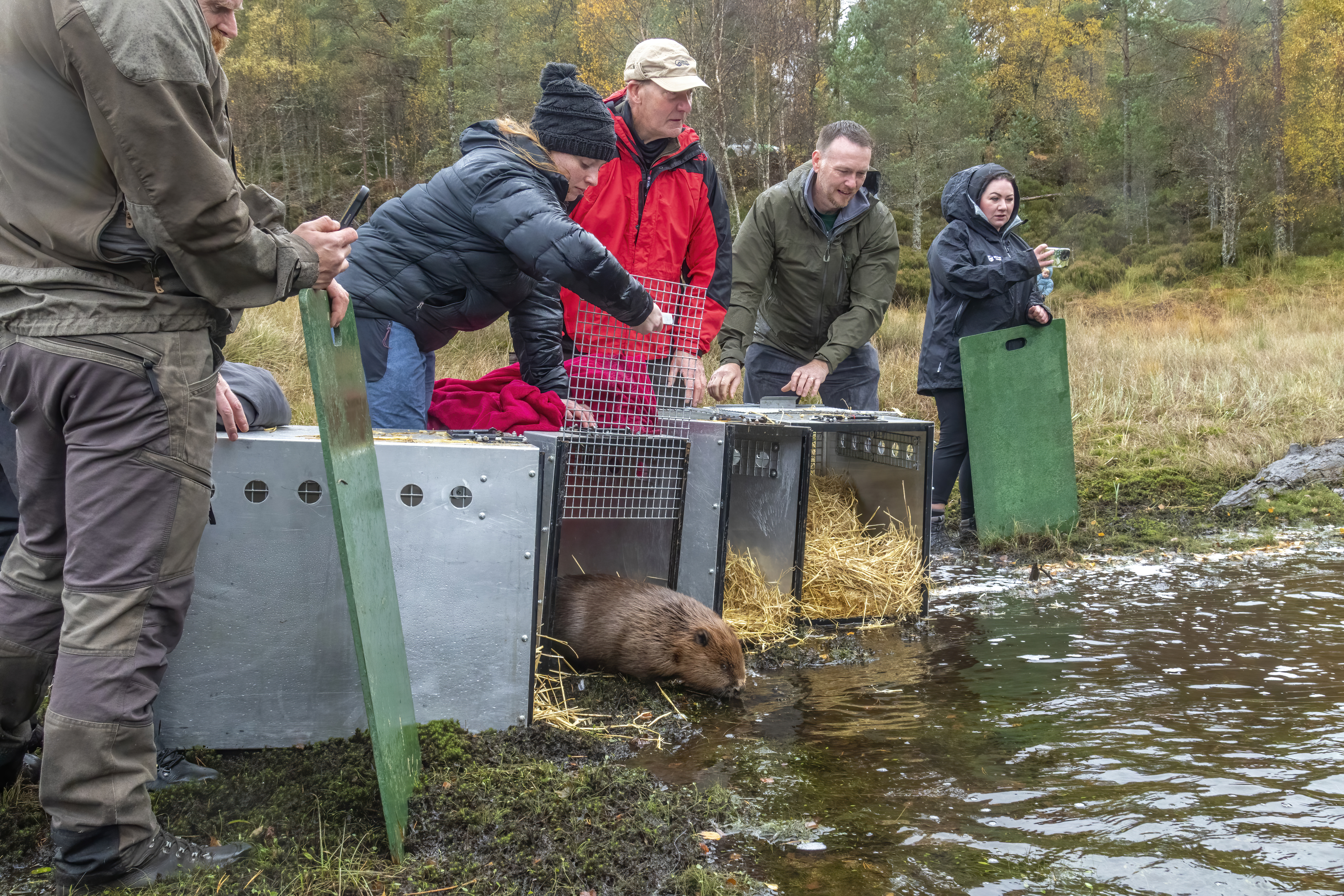
In 2025, Beaver Trust helped facilitate 22 beaver releases.[2] History was made in March that year, on land cared for by the National Trust at Little Sea in Purbeck, Dorset. As they stretched their noses out of their travel crates to sniff the willow wetland, two breeding pairs marked the first wild beaver release in England authorised by the Government.
Beaver Trust recognises that beaver reintroduction isn’t a silver bullet for every conservation or climate concern, but one piece of a complex recovery puzzle. The Trust compiles research on beaver impacts – both positive and negative – to allay local concerns and find practical ways for communities to co-exist. It encourages holistic land use, offering guidance for farmers like Chris to become ‘beaver-ready’, and works to increase the knowledge, skills, and confidence of the wider environmental sector.
Broader public engagement work, such as The Lodge Cast podcast, is getting everyone talking about beavers. The Trust’s third documentary film, Balancing the Scales, has been selected for three film festivals and sparked important, nuanced conversations about the delicate balance between beaver restoration and conserving migratory fish.
CEO Richard, who regularly paddleboards to see the progress of the colony on his local river, is excited for the future that beavers represent: “They’re agents of change, and their emergent recovery points the way to a more hopeful future of wilder, healthier and more awe-inspiring riverscapes that will enrich people’s lives and benefit wider society.”[1]
Oak supports Beaver Trust through our Special Interest Programme. Driven by the interests of our Trustees, it provides the space and flexibility to make grants outside of Oak’s other programme strategies.
https://beavertrust.org/beaver-trust-welcomes-richard-young-as-new-ceo/
https://www.sciencedirect.com/science/article/pii/S0048969725005066?dgcid=coauthor
https://beavertrust.org/wp-content/uploads/2026/01/Beaver-Trust-in-2025.pdf
Beavers are turning rivers into powerful carbon sinks | ScienceDaily
https://beavertrust.org/first-baby-beavers-in-400-years-born-in-scotlands-most-beautiful-glen/
Story taken from here: Beavers | WOODLAND VALLEY FARM – CORNWALL