16 September, 2026
Mentorship, courage, and community: carrying Bridge II Sports forward
Organisational strengthening and effectiveness / Article
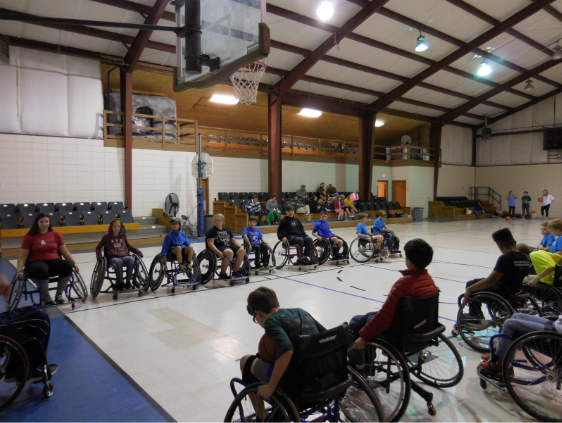
Fig. 1 GiGe – Girls Inspired Girls Empowered programme, run by BIIS in the early years to recruit girls to play adapted sports. Picture submitted by Ashley Thomas.
On most afternoons at Bridge II Sports in Durham, North Carolina, the gym or court is alive with movement. The thud of a basketball hitting a wheelchair frame, the quiet concentration of a visually impaired athlete preparing for a goalball throw, the laughter of participants discovering a sport they never imagined they could play. These moments capture what Bridge II Sports (BIIS) is at its core: a not-for-profit organisation that creates opportunities for people with physical disabilities to participate in a wide range of adapted sports. BIIS opens doors that are often closed to disabled athletes, offering structured programmes, leagues, and events that build confidence, community, and a sense of possibility.
The vision for BIIS came from Ashley Thomas, a former world‑ranked para‑kayaker, public speaker, and lifelong wheelchair user born with spina bifida. Ashley refused to accept a life defined by limitation. Through travel, competition, and life experience in the US and the UK, she saw what was possible when people with disabilities were given real access to recreation and sport. That insight led her to found Bridge II Sports nearly two decades ago, using adapted athletics as a tool to build strength, independence, and belonging for youth, adults, and veterans with diverse disabilities.
Under Ashley’s leadership, BIIS grew into a vibrant community offering year‑round programmes, regional competitions, and school-based initiatives designed to change the way society sees disability, empowering people to see themselves differently. She wanted BIIS to spark a broader cultural shift that challenged the idea that disability limits possibility, creating the chance for people with disabilities to participate fully in community life.
The years that followed the organisation’s early momentum brought a series of challenges that would strain any organisation. The COVID pandemic forced BIIS to rapidly reconfigure its programmes, shifting flagship events online, and developing new safety protocols to keep athletes engaged. Funding streams contracted as sponsors withdrew, and the organisation operated with reduced staff capacity for an extended period. By 2022, this culminated in significant operational disruptions that affected programme continuity, requiring Ashley to take on rebuild programme operations at a moment when resources were already stretched.
Together, these pressures created an environment in which it became increasingly clear that BIIS was evolving into a phase where a shift in leadership arrangements was necessary to support its continued development, as well as stronger systems, renewed capacity, and a more sustainable organisational structure. Out of a sense of clarity and responsibility, Ashley decided to share openly with Oak staff the full scope of what her organisation was facing. Oak understood that what she needed wasn’t just capacity-building inputs, but someone to help her breathe again.
The relationship between BIIS and Oak had always been grounded in trust. 10 years ago, Oak recognised the potential in this local, humble organisation, and chose to support it early in its development. What began as a discretionary grant grew into a Special Interest Programme (SIP) grant, defined by core support and organisational development assistance.
Oak suggested that Ashley should meet with mentor Chris Underhill. With more than 40 years of global experience in disability inclusion, mental health, and social entrepreneurship, Chris has led global initiatives and supported organisations through crises and transitions around the world.
Chris helped Ashley untangle what had happened in the previous few years and helped her see that none of it cancelled out the years of impact she had created. He also brought a steadiness to Bridge II Sports at a moment when it was deeply needed. “I am not sure what ‘magic’ Chris conjured up, but it worked,” says Ashley. “I looked forward to meeting with Chris and felt understood and heard.”
With renewed steadiness, Ashley resolved to see BIIS safely into its next chapter. She assembled a transition team: former board members she trusted and two new trustees. Together, and with Chris guiding the process, the group mapped out a path toward leadership succession over a 12-month period.
Then, as sometimes happens in the most important chapters of a story, the right person appeared unexpectedly.
In August, Ashley received an email from Stuart James, someone she had not yet met but who was moving to the area and shared a connection through the adaptive sports world. They arranged to meet for coffee. They discussed disability philosophy, sports leadership, community building, and their respective journeys. Stuart was a wheelchair user himself; he understood the mission not only professionally, but personally. His experience, values, and authenticity aligned naturally with BIIS’s ethos.
Stuart began his leadership position at BIIS in January 2026, ushering in a new era built on the foundation Ashley laid and strengthened through Chris’s mentorship and the Transition Team’s work. He brings with him a vision deeply connected to the past, yet oriented toward the future, embracing growth and a commitment to expand reach across youth and veteran programmes.
Transitions like this are among the most difficult in the not-for-profit world. Many falter. Many never fully happen. But BIIS’s transition succeeded because it was rooted in honesty, compassion, and shared responsibility. Ashley stepped forward with truth. Oak responded with care. Chris helped transform crisis into clarity. And Stuart emerged at precisely the right moment.
Today, as Ashley steps out of her role at Bridge II Sports, Stuart steps in as executive director. By carrying forward the heart and history of BIIS and leading the organisation into its next chapter, BIIS stands stronger for the journey, proving that even in moments of deep uncertainty, the right people, the right support, and the right timing can turn crisis into continuity. And woven through this journey is Oak’s Organisational Strengthening and Effectiveness team, who’s long‑term partnership with BIIS helped create the stability, resilience, and framework that made such a thoughtful transition possible.
If you want to find out more about Bridge II Sports, check out its website here, and you can also find out more about Ashley’s vision for her organisation in this video we shot of her in 2019. You can find out more about Oak’s organisational strengthening and effectiveness work here.