23 November, 2026
Sowing seeds of resilience in central Zambia
Environment Programme / Article
Image © Green Living Movement
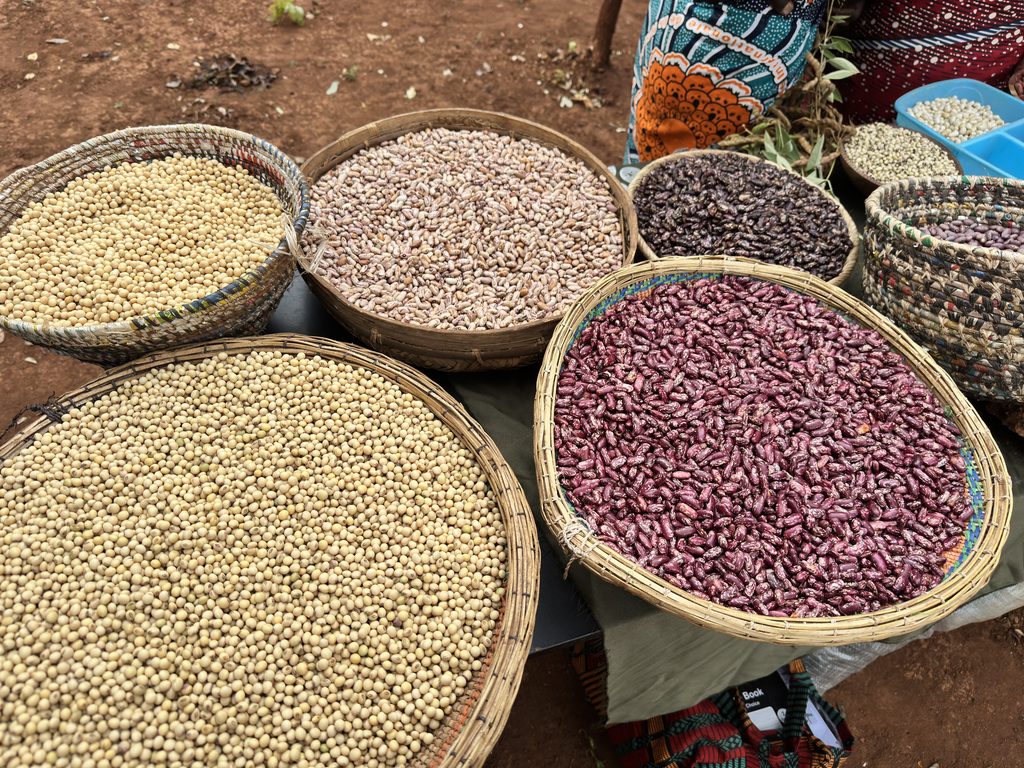
It’s the end of April 2025 and in the Mumbwa District of central Zambia, a new kind of bank is opening – one that will enrich the futures of hundreds of farming families across Shimbizhi ward. After Chief Mumba of the Kaonde people cuts the green ribbon, locals and guests alike cross the threshold to see the bank’s treasure. Bright orange popping corn and maize kernels, heads of sorghum, packets full of gourd pips – this is a community seed bank.1
Here, small-scale farmers can pick up climate-resilient, traditional seed varieties for grains and vegetables rich in nutrients, and avoid expensive, less resilient commercial hybrids that don’t thrive in local soils. Farmers will return next year to trade seeds from their own produce – a natural growth multiplier. The seed bank will also become a storehouse of indigenous knowledge and culture, preserving local farming traditions and ensuring the community has sovereignty over its own food sources.
“Many people have forgotten about local seeds,” says Edgar Chigowe, a farmer from Shiwezwa village. “These seeds were hard to find, but there are so many advantages to planting them.”2
Abigail Laishi has been using local seeds for several years and is pleased with the results: “I’ve planted beans, sunflowers, and groundnuts,” she says. “Everything germinated and is growing well.” 3
Strengthening local seed diversity is a cornerstone of agroecology – a regenerative farming approach that restores soil quality, improves biodiversity, mitigates climate change impacts, and ultimately ensures the sustainability of local food systems. Green Living Movement (GLM) is the not-for-profit organisation behind the seed bank. It is working to support the sustainable use of natural resources and community livelihoods in rural Zambia.
“For generations, farmers have depended on the rhythms of the land, the steady cycles of the seasons, and the predictability of the rains,” says GLM team leader Emmanuel Mutamba. “But in recent years, these rhythms have become erratic, seasons unpredictable, and rains increasingly scarce.” 4, 5
Zambia experienced a devastating drought in 2023-24 – its worst in 20 years, triggered by the El Niño phenomenon. Streams dried up months early, and livestock weakened as grazing lands turned bare. Crop production halved6, leaving households without food reserves in communities that depend heavily on agriculture. Farming techniques such as repeated tilling and excessive use of chemical fertilisers exacerbated the damage, by accelerating water runoff, eroding topsoil, and reducing the land’s natural ability to hold water.
For 300 farming households in Shimbizhi, the skills they’ve learned through GLM’s Building Community Resilience in Food and Nutrition Security through Agroecology project (BCRFNSA) will strengthen their community in an uncertain world. The project teaches integrated farming techniques that lead to long-term climate resilience and food security, such as producing local organic compost, managing forestry, keeping bees, and rearing livestock in a pass-on system, where initial recipients pass on goats and chickens to new members once their flock has multiplied. Ecological techniques such as mulching, potholing, and cover crops are all helping to help maintain soil moisture during prolonged dry spells.
Martin Songolo, a farmer from Chimomoto village, has seen several good things come from the project, including learning better animal husbandry and reducing his dependence on chemical fertilisers. “Instead of stressing about buying fruit at the market, we’ve planted trees by our home so we have easy access to fresh fruit,” he adds.7
Farmer Gift Sikale is also pleased to see his maize crop doing well, after pests like armyworms ate into previous years’ harvests. “Even if we don’t have money, we can still manage these pests using the cost-effective methods we have learned,” he says. “We simply need to use ashes, chilli, neem, and intercropping practices, which will be enough to rid the pests and ensure healthy crops.” 8
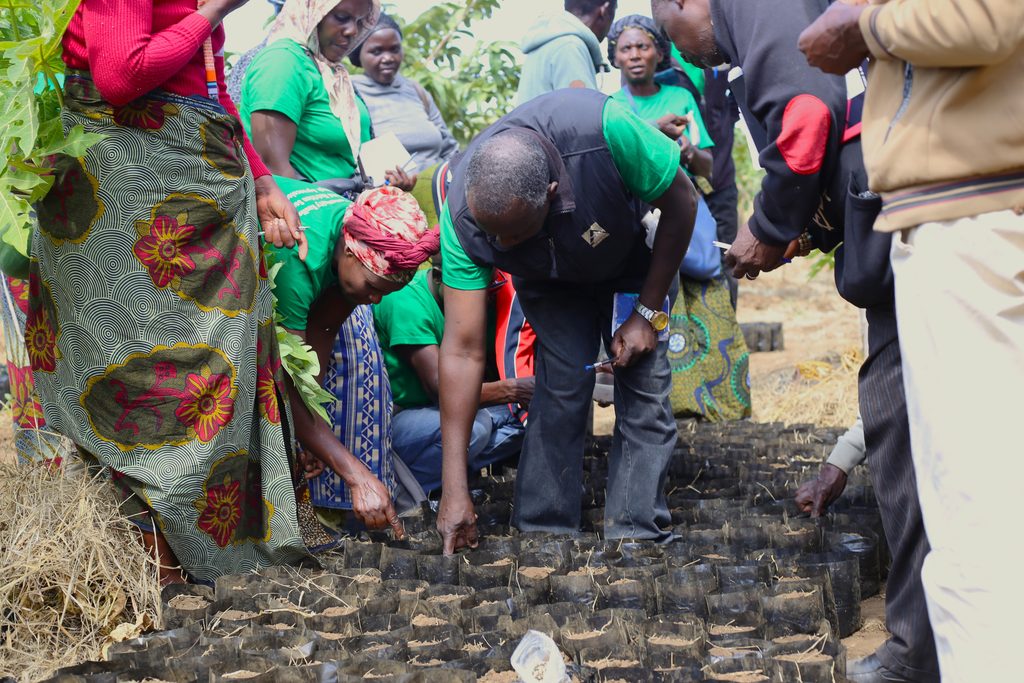
In the wake of Zambia’s drought, BCRFNSA members have learned nature-based solutions for harvesting water during the rainy season and managing moisture levels throughout the year. By constructing soil bunds, they can stop erosion, while half-moon and contour ridges prevent water run-off, allowing more water to sink into the soil.
For Emmanuel Mutamba, the movement started by the men and women from these first 300 households is just the beginning. “When you transform conservation from an obligation into a shared community priority, these practices have huge potential to regenerate degraded croplands,” he says. “This will lead to improved food security and biodiversity, and strengthen community resilience. It really is a win-win.”
Oak has supported Green Living Movement and its project, Building Community Resilience in Food and Nutrition Security through Agroecology, since 2023. Check out the video here. This is part of the Regenerative Landscapes sub-programme of our Environment programme, which supports efforts that focus on regenerative agriculture and rewilding, to safeguard our future and restore our connection to nature.
References:
[1] https://www.facebook.com/ZAABnetwork/posts/pfbid02MQo4DeUoZiwPEqT82STfShn5zVQBH4d1DxpfHmQnKds6hedQ6dVfcxbqpDDY9v7Vl
[2] https://www.facebook.com/100064876564702/videos/3524461344530459
[3] https://www.facebook.com/100064876564702/videos/3524461344530459
[4] Zambia Daily Mail: https://www.pressreader.com/zambia/zambia-daily-mail-798j/20250811/281857239875739
[5] https://www.facebook.com/ZAABnetwork/posts/pfbid02kJa7nvBpXG6rY1g4F8TQvkZmV5Y4egdYY7bCe4BpDwMaBhWR3m7Z6jaa8tp6JtE1l
[6] https://www.unocha.org/publications/report/zambia/zambia-drought-response-appeal-may-2024-december-2024-may-2024
[7] https://www.facebook.com/100064876564702/videos/3524461344530459
[8] https://www.facebook.com/100064876564702/videos/3524461344530459